Guardyx for Research Agents
Let research agents roam your data and the web, without letting the sensitive stuff wander off.
The scenario
Research agents run long, mostly-autonomous jobs. They query internal knowledge and databases, call external tools and APIs, browse the web, and act on what they find. Often, they chain dozens of tool calls with nobody watching each step.
Approval requested
Held for a human before it runs.
- Agent
- Research Agent
- Tool
SLACK_SEND_MESSAGE
Arguments
{
  "channel": "#ext-partner-acme",
  "text": "Summary of competitors’ public pricing pages…"
}
Policy
Sending data to an approved-but-elevated destination: approval required.
Approved. The message posts, and your decision is on the audit trail.
Denied. The message never left, and your decision is on the audit trail.
What can go wrong
A research agent ships sensitive internal data off to an external service or an unapproved API: an exfiltration path that’s easy to miss. It acts on sketchy content it grabbed off the web (hello, prompt injection). It can also run up a surprising bill, or reach into systems it was never meant to touch. Because these runs go unattended across many steps, a single bad move can go unnoticed until the damage is done.
Who owns this problem
Your CISO and data-security team own the risk. Your platform or research leads, pointing autonomous agents at sensitive data, own the rollout.
What it looks like deployed
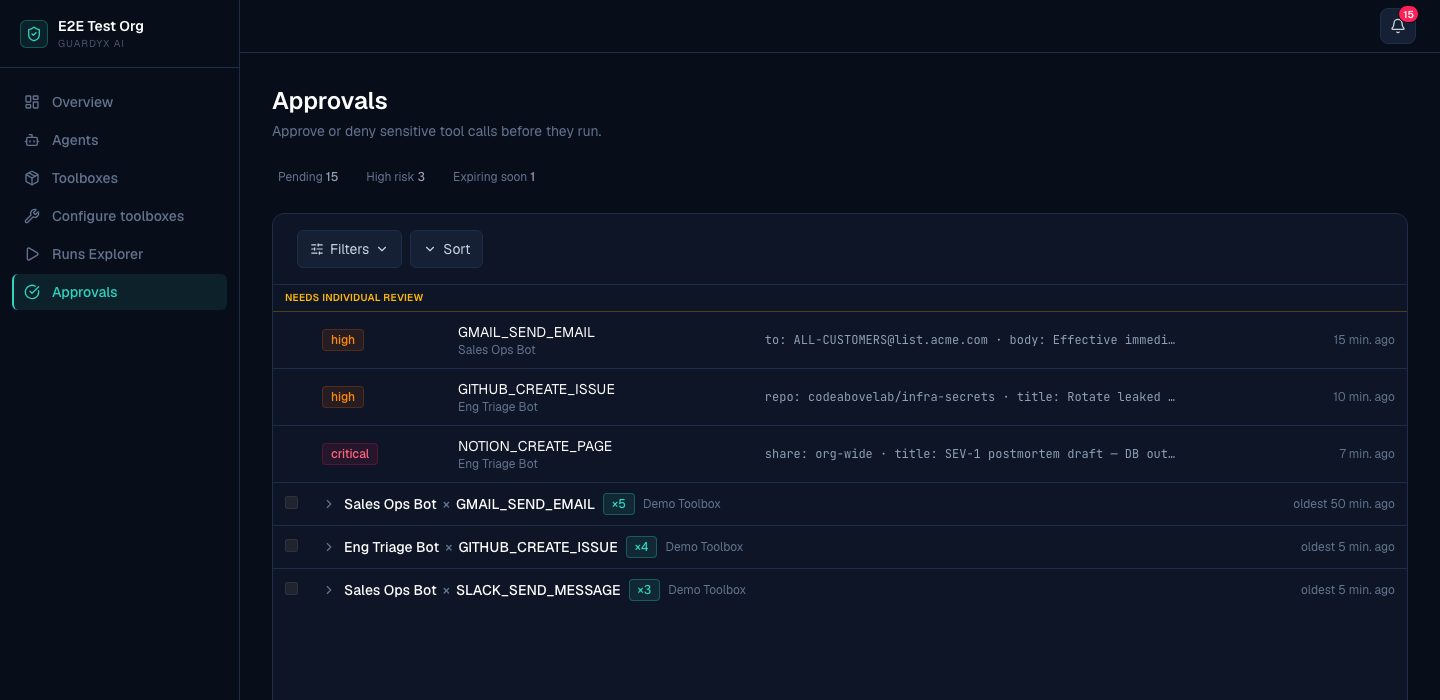
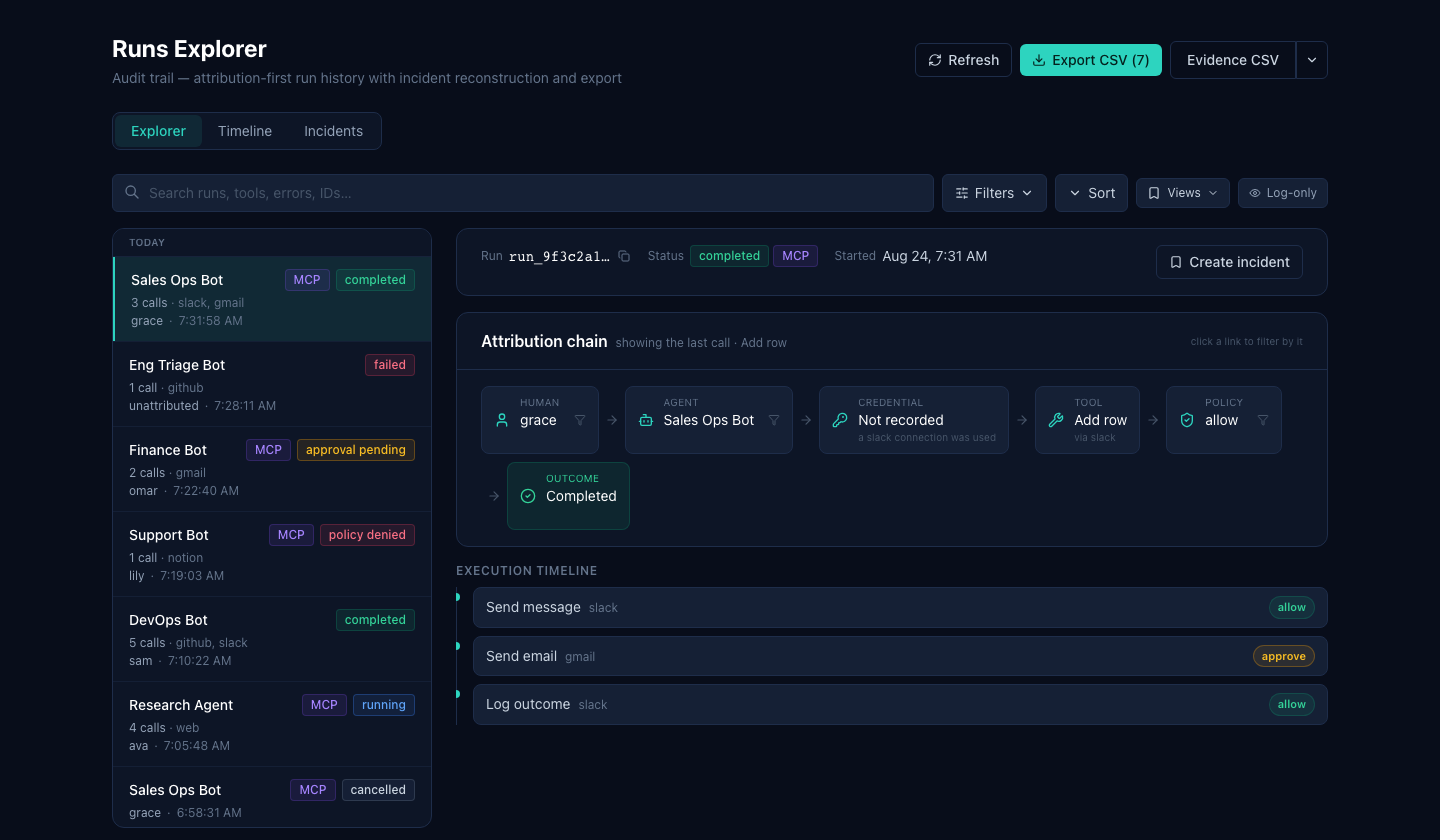
Guardyx sits in front of every tool call a research agent makes. Reading and internal analysis just flow. Anything that sends data somewhere external, calls an unapproved tool, or crosses a data-sensitivity line gets checked and either blocked or held for approval. Every call is traced, so even a long autonomous run is fully reviewable after the fact.
What you're covering
You get real control over where data can and can’t go, even on fully autonomous runs. You don’t have to watch every step yourself. Guardyx keeps the agent boxed into approved tools and destinations, and hands you a complete trace of everything it did.
How it fits your existing tools
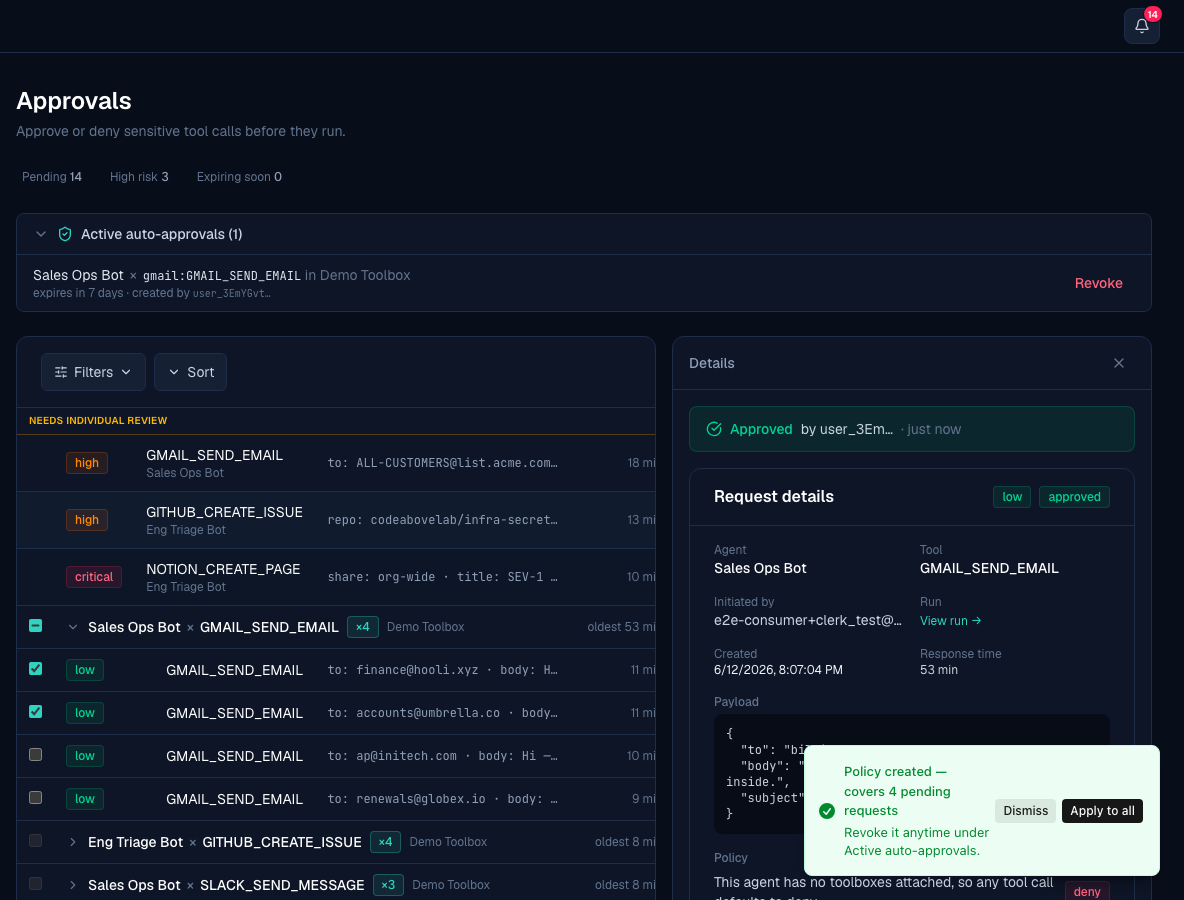
Policies define which data classes and external destinations are fair game. Approvals land in the Guardyx portal, Slack, or email. Every call is captured as an exportable, auditor-ready evidence pack. Exceptions are handled cleanly, so real research doesn’t stall.
Example controls
A quick, plain-language picture of the policy decisions you'd set:
- Allow
- Internal reads and analysis.
- Hold for a human
- Calling a new external tool, or sending data to an approved-but-elevated destination.
- Deny
- Sending sensitive data to an unapproved external service, or acting on untrusted web content.
Without Guardyx / With Guardyx
Without: Sensitive data can slip to an external service unnoticed.
With Guardyx: Data headed to unapproved destinations is blocked first.
Without: Long autonomous runs go unsupervised.
With Guardyx: Every tool call is checked and fully traced.
Without: A bad step is found only after the damage.
With Guardyx: Exceptions are held or denied before they run.
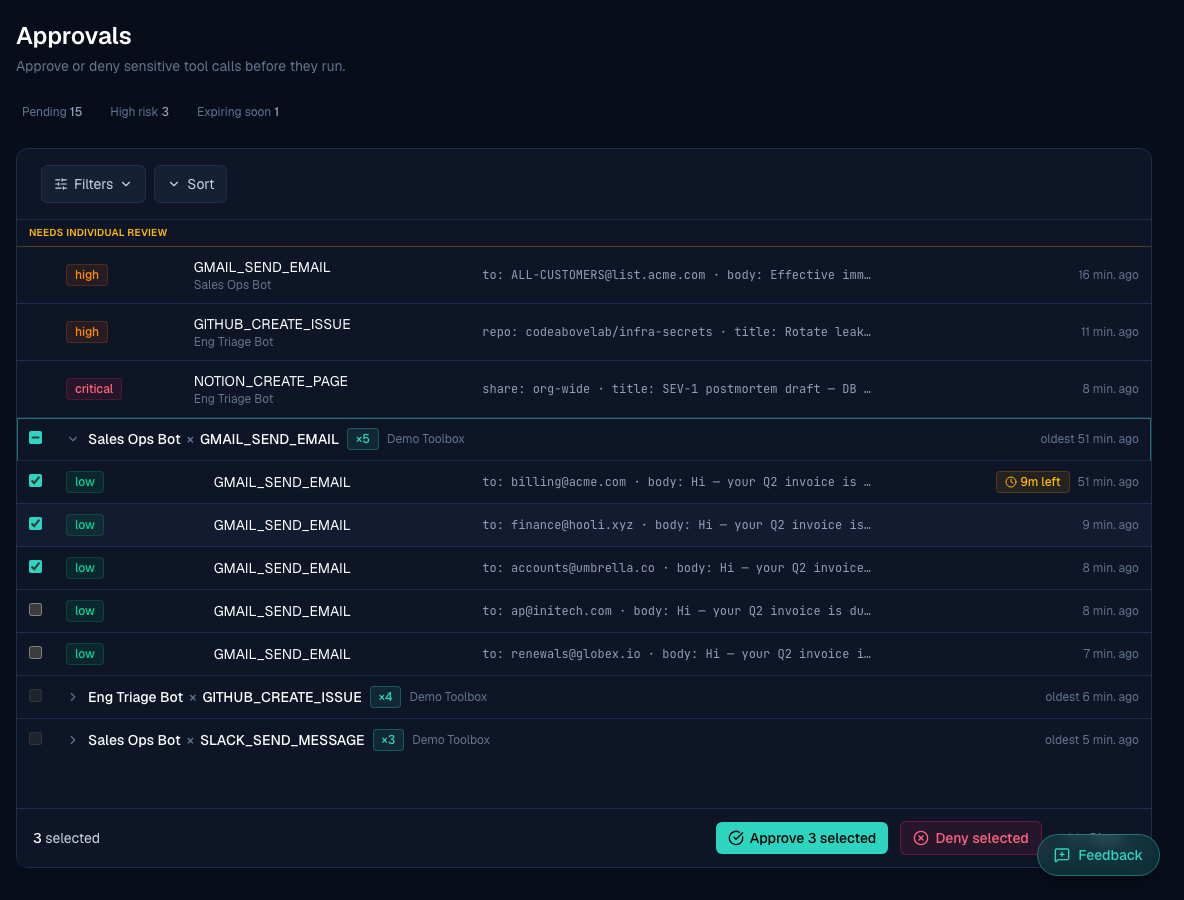
A checkpoint on every research agent action.
New external tools and elevated destinations get a checkpoint, even on fully autonomous runs.