Guardyx for Internal Copilots
Let your team’s copilots actually do things across internal systems, without handing them the keys to everything.
The scenario
Internal copilots have graduated from answering questions to actually doing things. They pull internal data, update records, kick off workflows, and take actions across HR, IT, finance, and ops, on an employee’s behalf.
Approval requested
Held for a human before it runs.
- Agent
- Workplace Copilot
- Tool
GOOGLESHEETS_BATCH_GET
Arguments
{
  "sheet": "Salaries — Support team",
  "range": "A1:F40",
  "on_behalf_of": "j.rivera (Support manager)"
}
Policy
Reaching sensitive data at the edge of the requester’s role: approval required.
Approved. The copilot reads the sheet, and your decision is on the audit trail.
Denied. The sheet stayed closed, and your decision is on the audit trail.
What can go wrong
A copilot surfaces something an employee shouldn’t see: salaries, HR records, another team’s confidential data. It acts beyond that person’s authority, or changes a system it shouldn’t touch. It can even become a quiet path for sensitive data to leak, or for a low-privilege user to reach high-privilege actions. The blast radius is every internal system the copilot can reach.
Who owns this problem
Your CISO and IT/security leadership own the risk. Your platform team, rolling copilots out across the company, owns the rollout.
What it looks like deployed
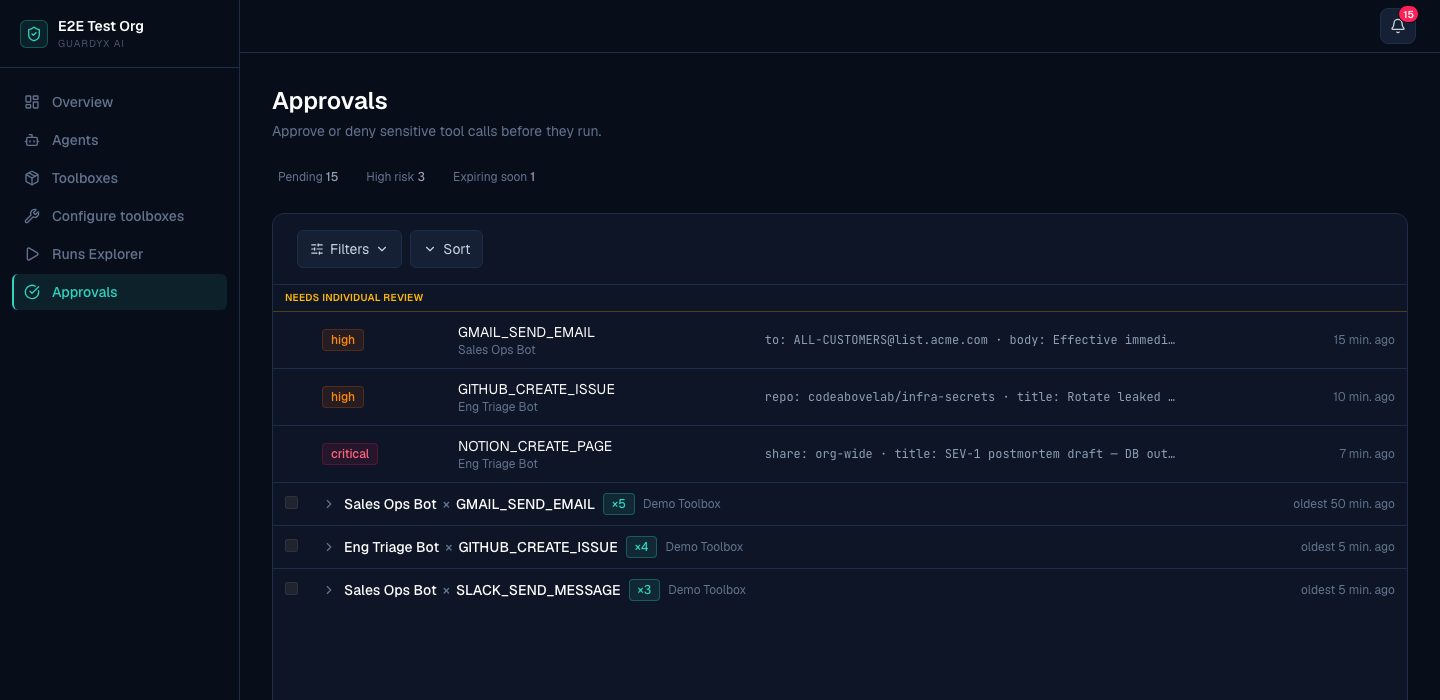
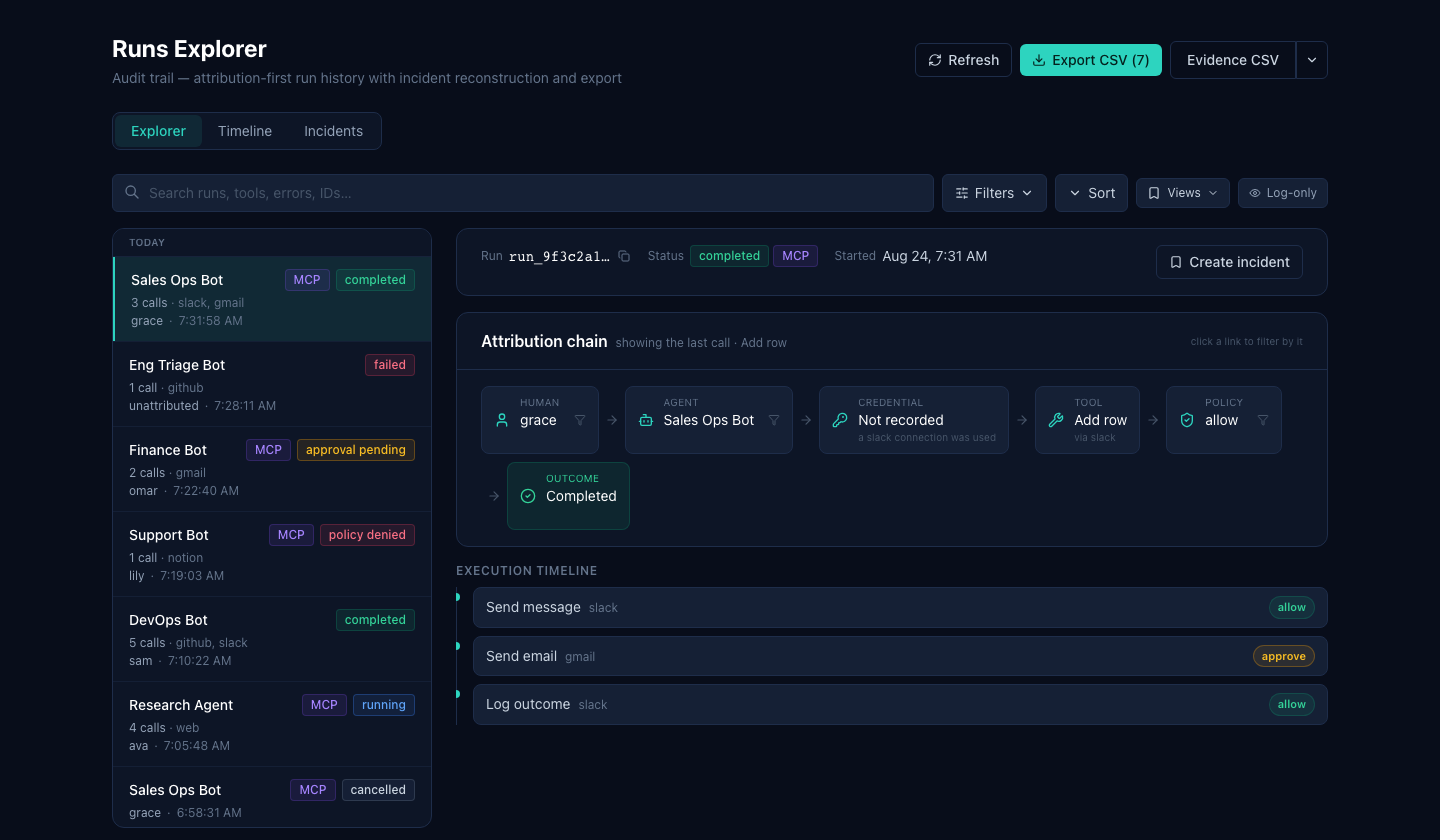
Guardyx sits in front of every action a copilot takes and enforces what each person and each tool is actually allowed to do. In-policy actions run; anything that crosses an authorization line, touches sensitive data, or changes a protected system gets checked and held for approval. Every action is logged against the person who triggered it.
What you're covering
You get real least-privilege enforcement and a full record of every copilot action. You don’t have to write custom access rules into every integration. Your people get genuinely useful copilots, and security keeps a firm line around what they can reach.
How it fits your existing tools
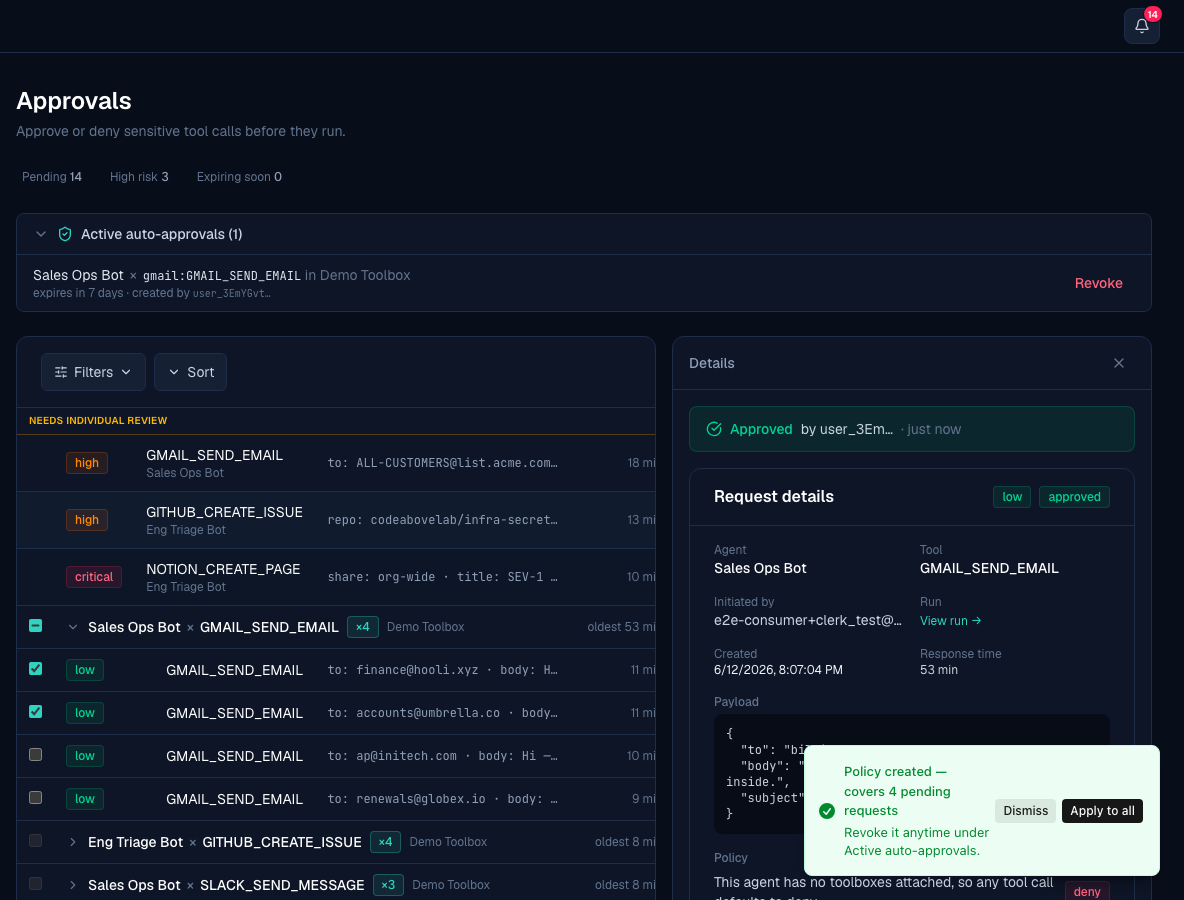
Policies line up with your identity model through OIDC and role-based access control (RBAC). Approvals land in the Guardyx portal, Slack, or email. Every action is captured as an exportable, auditor-ready evidence pack. You set the per-role and per-tool rules, and exceptions are handled cleanly so day-to-day work keeps moving.
Example controls
A quick, plain-language picture of the policy decisions you'd set:
- Allow
- In-scope reads and actions that fall within the user’s own role.
- Hold for a human
- Reaching sensitive data or acting near an authorization boundary.
- Deny
- Actions beyond the user’s privilege, or changes to a protected system.
Without Guardyx / With Guardyx
Without: A copilot can reach data or actions beyond the user’s role.
With Guardyx: Every action is checked against that user’s real privileges.
Without: Access rules get hand-coded into each integration.
With Guardyx: One control layer enforces least privilege everywhere.
Without: No clear record of who did what through the copilot.
With Guardyx: Every action is logged against the person who triggered it.
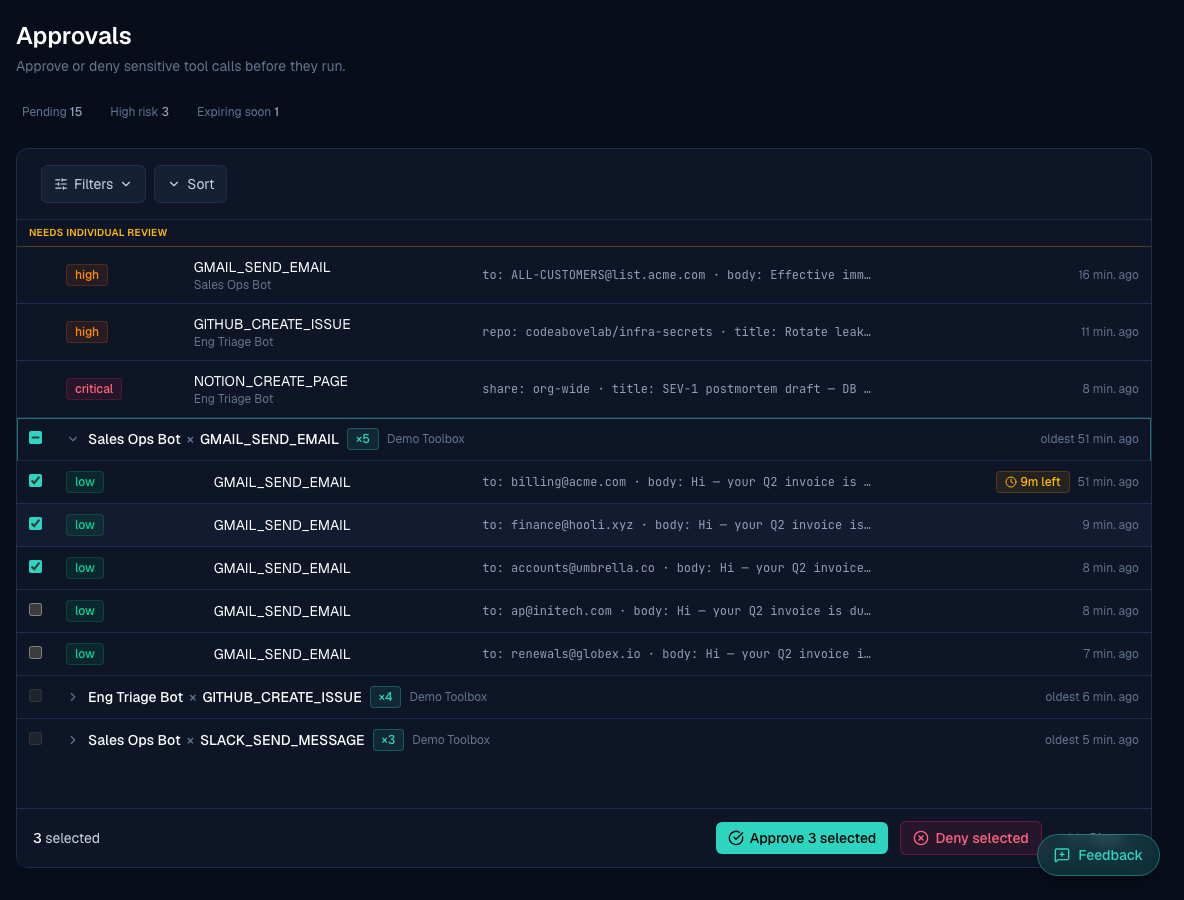
Access controls on every copilot action.
Real least-privilege enforcement at the authorization boundary, and a full record of every copilot action.